

Common Daily Problems People Face and How to Handle Them
You know the feeling. It’s not the big, dramatic crisis that breaks you. It’s not the flat tire on the highway or the sudden fever. You’re prepared for those, in a way. Your adrenaline kicks in. You rise to the occasion.
No, the real grind is subtler. It’s the printer jamming as you’re rushing out the door for a meeting you’re already late for. It’s the cold, sloshing sensation of coffee spilling onto your only clean shirt. It’s the 43rd pointless email of the morning, asking for a vague update on a project you thought was dead. It’s the traffic light that turns red just for you, the missing keys, the internet cutting out right before you hit send.
By 10:17 AM, you feel utterly deflated. Your energy is gone, siphoned off in tiny, relentless increments. There’s no single villain to blame, no epic battle you lost. Just a dozen paper cuts on your soul. This, my friend, is the tyranny of small daily problems that drain your energy. They don’t knock you down; they just convince you to lie down. Today, let’s talk about plugging that leak.
The General Problems People Face in Their Day to Day Life
Part 1: Why Spilling Your Coffee Feels Like a Moral Failure
Let’s get one thing straight: you’re not crazy, and you’re not weak. That wave of pure, hot rage when you can’t find a matching sock isn’t an overreaction. It’s biology having a bad day.
Our brains are spectacular, ancient machines, brilliant at spotting sabre-tooth tigers. They are significantly less brilliant at differentiating between a sabre-tooth tiger and a Slack message from Kevin in Accounting asking you to “circle back.” When we’re already running on fumes—tired, hungry, stressed about bigger things—our internal threat alarm, the amygdala, gets twitchy. It starts seeing tigers everywhere. It misfires.

So the burnt toast isn’t just burnt toast. To your overloaded system, it’s the final, undeniable proof that the universe is chaotic, hostile, and personally invested in your downfall. The mental load you’re carrying—the unpaid bills, the tense text from a friend, the nagging feeling you forgot something—acts like a magnifying glass. It focuses all the sun’s heat of your stress onto one tiny, helpless ant: the broken stapler.
This is the great modern illusion: why everyday problems feel harder than they are. The problem itself is a 2 out of 10. But your exhausted, overstimulated brain, already humming at an 8, registers it as a 12. It’s the difference between a single drop of water falling on your head, and that same drop when you’re already soaked to the bone and shivering. One is a nuisance. The other is the last straw.
Recognizing this gap—between the thing and the weight of the thing—is the first, crucial step. It’s the moment you stop yelling at the cable company hold music and think, “Wait. I’m not actually this angry about Muzak. I’m angry because I’ve felt powerless all week, and this is the only place I can scream.” That moment of awareness is your lifeline.
“The greatest weapon against stress is our ability to choose one thought over another.” – William James
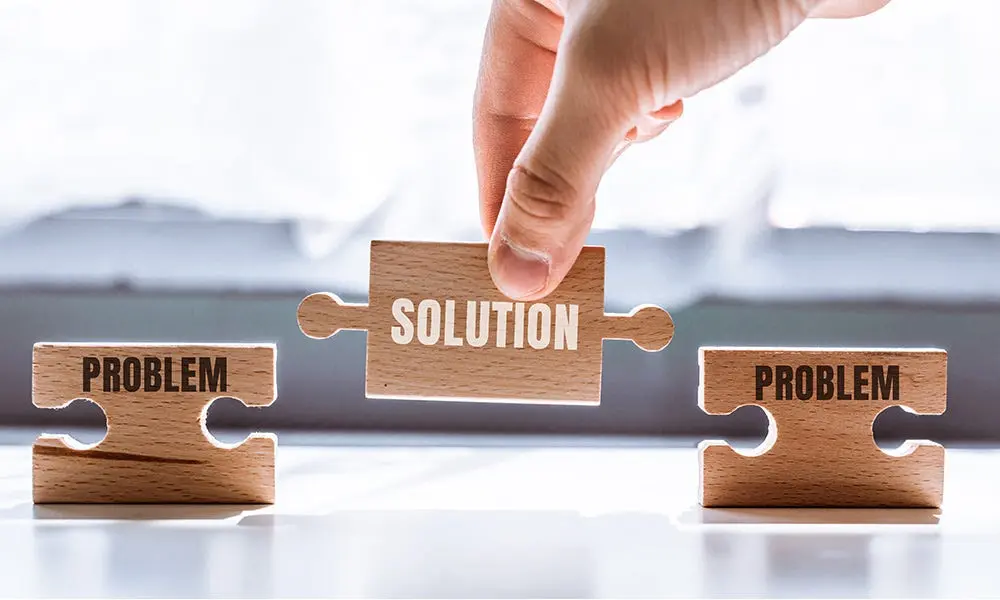
Part 2: The Sacred Space Between “Oh No” and “@#&%!”
Okay, so we’ve identified the enemy: our own amplified wiring. Now what? We can’t rewind evolution. But we can build a buffer zone.
This is the art of inserting a pause. It’s the mental equivalent of slamming on the brakes, skidding to a halt just before you say the thing you can’t take back or spiral into a full-blown internal meltdown. Learning how to deal with daily frustration calmly isn’t about becoming a zen robot who feels nothing. It’s about becoming the commander of your own ship in a squall, not a passenger being tossed around.
The trick is having a tiny, stupidly simple ritual for that exact second. My favourite is the “Ten-Second Exhale.” When the ketchup bottle explodes all over the counter, you don’t react. You just… breathe out. Slowly. For ten whole seconds. You watch the red splatter. You feel your heart hammering. You just breathe through it. In that space, the amygdala’s fire alarm dims just enough for the wiser, quieter part of your brain to step in.
Another one is the “Time-Warp Question.” Ask yourself: “Will this matter in 24 hours? What about next week?” The printer jam will be a forgotten blip by noon. The spilled coffee is a story you’ll tell later. It shrinks the problem back to its true size.

Sometimes, the most powerful move is the physical one. Literally walk away. Step outside for 60 seconds of air. Go splash water on your face. The change of scene disrupts the stress feedback loop happening in your head. It’s a system reboot.
These pauses are muscles. The more you practice them on the small stuff—the lost TV remote, the slow website—the stronger they’ll be when you really need them.
Part 3: The Boring, Beautiful Magic of a Frictionless Life
Practicing the pause is your emergency brake. But you don’t want to drive everywhere with your foot hovering over it. The real goal is to smooth out the road so you don’t need to slam on the brakes so often.
This is where we move from being reactive to being slyly, gently proactive. It’s about studying the simple ways people handle daily challenges before they ever become “problems.”

These people aren’t superhumans. They’re just architects. They design their days to have less friction. It’s the unsexy stuff:
- The Five-Minute Morning Preview: While your coffee brews, you don’t check email. You just think through your day. “Meeting at 10, need that report. Kid pickup at 3. Ah, I should gas up the car on the way.” This simple scan helps you anticipate hiccups before they surprise you.
- The Sunday Reset: It’s not a deep clean. It’s 20 minutes—tidying surfaces, making sure you have clean clothes for Monday, glancing at the calendar. It’s clearing the physical and mental decks so the week doesn’t start on defense.
- The Brain Dump: Keeping a running list of “stuff” in your head is like having 50 browser tabs open. It slows everything down. Get it out on paper or a notes app. It’s not a to-do list; it’s an “I don’t have to remember this anymore” list.
- The Power of “Not Now”: That email that isn’t urgent? Don’t let it hijack your focus. Tag it, schedule time for it later. You train the world to respect your attention.
This isn’t about rigid control. It’s about creating little pockets of order so you have energy left for the truly important, unpredictable things—like life.
Part 4: The Fog That Rolls In: When the Drips Become a Flood
But let’s be real. Some weeks, the universe seems to have a personal vendetta. The systems fail. The pauses are too short. One tiny thing after another goes wrong until a strange fog settles over you.
“Worry is like a rocking chair: it gives you something to do but never gets you anywhere.” – Often attributed to Van Wilder/Erma Bombeck
This is the dangerous, sneaky part. You’re no longer dealing with individual problems. You’ve hit the tipping point. This is when small problems start affecting your mood in a deep, lasting way. The signs are subtle but clear:
- You’re not just annoyed at the traffic. You feel a deep, cynical resentment toward your entire city and everyone in it.
- The messy kitchen isn’t just a chore; it feels like a crushing indictment of your inability to “adult.”
- A mild critique from your partner doesn’t lead to a discussion; it sends you into a silent, hours-long funk.
- Everything feels heavy, pointless, or personally targeted.
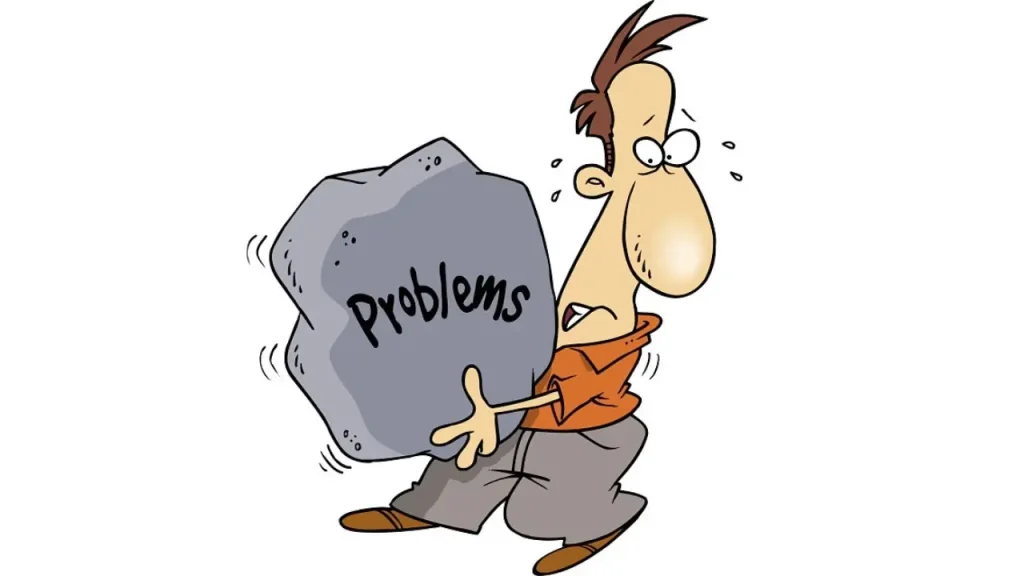
You’ve moved from “I’m having a problem” to “I am the problem, and my life is made of problems.” That’s the fog. It blurs everything, making every minor annoyance confirm your worst beliefs about the day, your job, yourself.
Recognizing this fog for what it is—not truth, but accumulated fatigue—is critical. It means the game has changed. It’s no longer about managing incidents; it’s about changing the weather inside you.
Part 5: The Reset: Draining the Swamp
When you’re in the fog, more tips and hacks won’t cut it. You need a ritual, a deliberate ceremony to drain the swamp. This is the equivalent of rebooting your router after days of glitchy internet.
It has to be an action that is both symbolic and practical. It tells your brain and body, “We are clearing the slate.”
- The Digital Purge: For an evening or a full weekend day, be unreachable. Silence notifications. Hide your phone. The constant ping-pong of other people’s demands is a core part of the drain. Create silence.
- The Nature Walk (Without Headphones): Go outside. Walk without a podcast, without music. Just listen to your feet, the birds, the wind. Let your thoughts unravel without you grabbing at them. Nature doesn’t care about your inbox. It’s deeply humbling and calming.
- The Vent & Release: Call that one friend who gets it. Have a full, dramatic, maybe even funny rant. Get it all out. Then, and this is the key, do something completely different and fun. Watch a silly movie. Bake cookies. Play a game. You must physically and mentally mark the end of the venting session.
- The Physical Reset: Clean a single room. Organize a drawer. Wash your sheets. There’s a profound psychological link between external order and internal calm. You are literally clearing your space, which helps clear your head.
This isn’t daily maintenance. It’s triage for your spirit. You’re lowering the overall water level of your stress so that when the next drip comes—and it will—it’s just a drip, not a flood.
The goal was never a problem-free life. That’s a fantasy. The printer will jam again. The coffee will spill. Kevin in Accounting will find new and exciting ways to circle back.
The real, achievable goal is to strengthen your emotional immune system. To understand why the little things slice so deep, to build a pause into your reactions, to design your days with less friction, to recognize when you’re sinking into the fog, and to have a sacred, non-negotiable ritual to pull yourself back out.
It’s about moving from being a passive recipient of daily chaos to being an active, compassionate curator of your own energy. So the next time the small stuff starts piling up, you won’t feel drained. You’ll feel prepared. You’ll look at the spilled coffee, take that ten-second exhale, and think, “Nice try, universe. But I’ve got a clean shirt, and I know how to drain the swamp.”


