
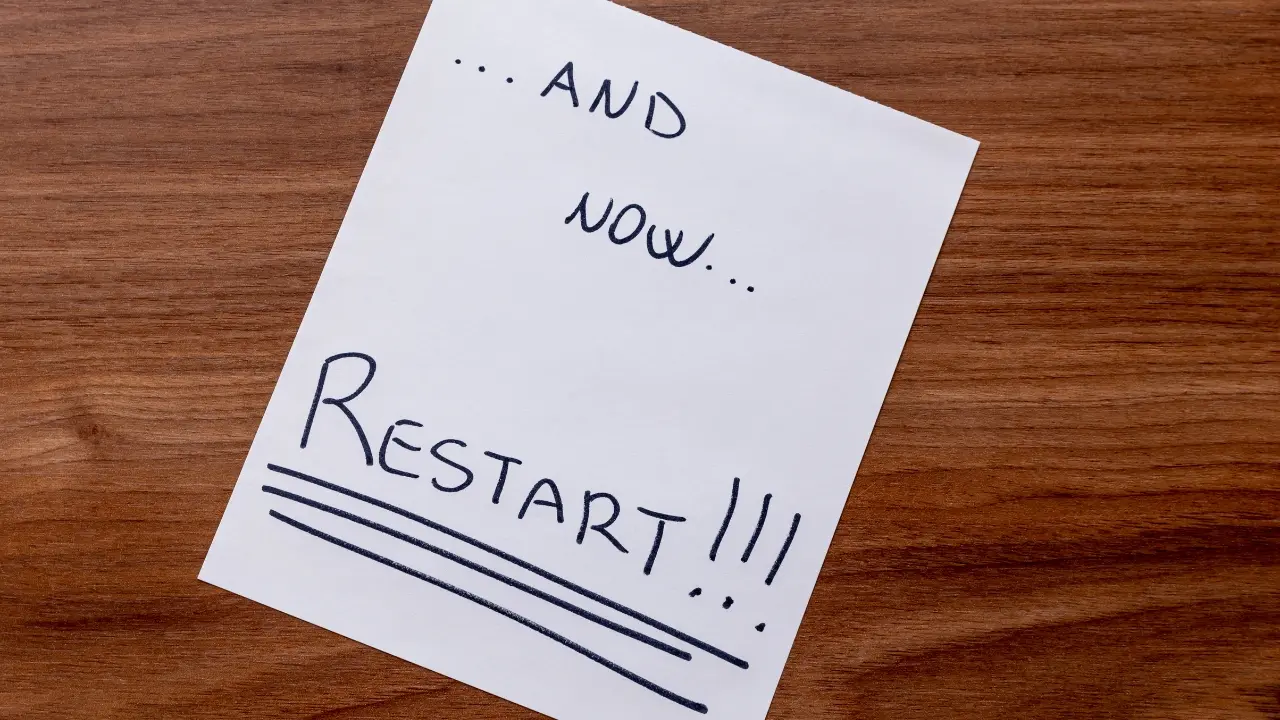
Restart: Why Restarting Is a Skill, Not a Failure
Restarting life is often misunderstood.
Most people believe that restarting means something went wrong. It is treated as a sign of weakness, confusion, or poor decision-making. Society quietly rewards those who “keep going” and questions those who pause, change direction, or rethink their path.
Because of this belief, many people continue even when they feel disconnected, exhausted, or stuck.
But restarting life is not failure.
Restarting life is a skill.
And like any skill, it can be learned, practiced, and improved.
Why Restarting Life Feels So Hard
Restarting life feels difficult not because it is wrong, but because it goes against conditioning.
From an early age, people are taught to move forward continuously:
- Finish what you start
- Do not stop
- Do not look back
- Keep pushing
These ideas create discipline, but they also create fear of reflection. Stopping to reassess feels dangerous because it is unfamiliar.
Restarting life requires a person to admit one thing:
“This direction may no longer be right for me.”
That admission feels uncomfortable. But discomfort does not mean incorrect.
Restarting Life Is Not Giving Up
One of the biggest misunderstandings about restarting life is confusing it with quitting.
Quitting is leaving without understanding.
Restarting is staying long enough to understand and then adjusting.
Restarting does not mean abandoning responsibilities, relationships, or work. It means changing how a person thinks, responds, and chooses.
Many restarts happen quietly:
- While continuing the same job
- While meeting the same obligations
- While living the same daily routine
The change happens internally first.
Restarting life is not about running away.
It is about realigning.
Restarting Life Is a Skill, Not an Emotion
People often wait for motivation to restart. That rarely works.
Restarting life is not driven by emotion. It is driven by awareness.
A skill has structure. Restarting life also has structure:
- Awareness of patterns
- Willingness to pause
- Ability to reflect honestly
- Readiness to adjust gradually
This is not dramatic. It is practical.
Those who restart successfully do not destroy their life and rebuild from zero. They refine what exists.
The Role of Awareness in Restarting Life
Restarting life begins with awareness.
Awareness means noticing:
- Repeated frustration
- Ongoing fatigue
- Loss of meaning
- Feeling busy but unfulfilled
These signs are not problems. They are signals.
Ignoring these signals leads to burnout. Reacting impulsively leads to chaos. Awareness allows a person to restart without damage.
Restarting life is choosing awareness over autopilot.
Restarting Life Does Not Require Immediate Action
Another mistake people make is believing restarting life requires instant decisions.
It does not.
Restarting life often begins with inaction a pause from unnecessary movement.
This pause allows:
- Clear thinking
- Emotional balance
- Honest self-evaluation
Rushed decisions often repeat old mistakes. Restarting life works best when it is slow, intentional, and calm.
Why Restarting Life Requires a Pause
A pause is not laziness.
A pause is preparation.
Modern life rewards speed. But speed without clarity creates exhaustion, not progress.
Restarting life requires time to think. Even a small pause an hour redirected from distraction to reflection can change perspective.
Restarting life is less about doing more and more about seeing clearly.
Restarting Life Is a Process, Not a Moment
Restarting life does not happen in one decision.
It unfolds in stages:
- Awareness
- Reflection
- Reframing
- Small adjustments
- Consistency
Skipping steps creates confusion. Respecting the process creates stability.
Restarting life works when patience replaces urgency.
Why Restarting Life Leads to Strength
People who learn how to restart life develop resilience.
They stop fearing change because they understand how to navigate it. They stop clinging to outdated choices because they trust their ability to adjust.
Restarting life builds confidence not through control, but through clarity.
Those who restart intelligently move forward with purpose, not pressure.
Restarting Life Is a Choice, Not a Crisis
Most people restart only after a crisis. That is not necessary.
Restarting life can be proactive. It can be calm. It can happen before damage occurs.
Choosing to restart is choosing awareness over denial.
It is choosing alignment over endurance.
Final Thought
Restarting life is not admitting defeat.
It is recognizing growth.
It is not a failure.
It is a skill.
And those who develop this skill do not fear pauses, transitions, or uncertainty. They understand that life evolves and the ability to restart is what keeps it moving in the right direction.


