
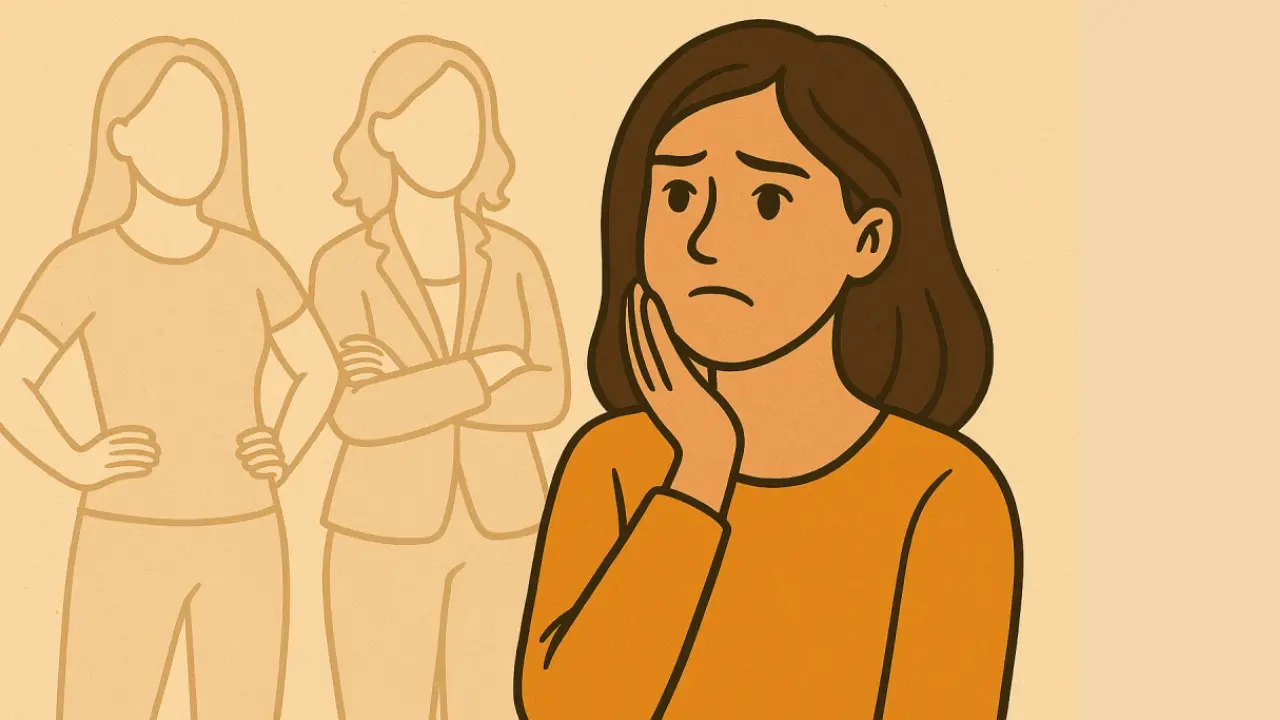
Comparing Yourself to Others While Learning: Why It Hurts More Than It Helps
“Comparison is the thief of joy — and in learning, it’s also the thief of progress.”
— Adapted from Theodore Roosevelt
You sit down to study. You’re doing okay — not great, but okay. Then you glance at the person next to you, or scroll through someone’s social media post about how they “finally cracked” the concept that’s still confusing you, and suddenly okay doesn’t feel okay anymore. Sound familiar? You’re not alone, and it’s worth understanding exactly why this happens and what it quietly does to your progress.
Comparing yourself to others while learning is one of the most common traps learners fall into. It’s human, understandable, and — here’s the uncomfortable part — almost always unhelpful. Not because ambition is bad, but because the comparisons we make are almost never fair, accurate, or based on the full picture.
The Invisible Backstory You’re Ignoring
When you compare your learning progress to someone else’s, you’re typically comparing your inside experience to their outside appearance. You see their results. You feel your struggles. That’s never a fair match.
The person who seems to grasp a concept in minutes might have stumbled across a similar idea years ago in a completely different context. The classmate who aces the exam might have studied the same material three times over in previous roles. The online creator who makes complex topics look effortless has likely spent years building the mental scaffolding you can’t see in a three-minute video.
Learning does not happen on a level playing field. Each person brings a different set of prior knowledge, personal experiences, and cognitive strengths. When you measure your beginning against someone else’s middle, you’re setting yourself up for a distorted view of your own ability.
You’re not behind. You’re on a different road, with different starting conditions, moving at the pace that your brain actually needs right now.
What Comparison Actually Does to Your Brain
There’s a real psychological cost to constant comparison, and it goes deeper than just feeling a bit discouraged. When learners frequently measure themselves against others, a few things tend to happen:
Attention shifts from learning to performing. Instead of asking “do I understand this?” you start asking “do I look like I understand this?” Those are very different questions, and only one of them leads to genuine growth.
Mistakes become shameful rather than useful. Making errors is how the brain learns. It’s not a flaw in the process — it is the process. But when you’re watching how others perform, mistakes start to feel like public evidence of inadequacy instead of private stepping stones toward mastery.
Motivation becomes fragile. When your sense of progress depends on staying ahead of — or catching up with — someone else, your motivation is always at the mercy of what they do next. That’s an exhausting and unstable place to learn from.
The Learning Speed Myth
One of the most stubborn misconceptions in education is that faster equals smarter. It doesn’t. Speed of understanding has more to do with background familiarity than raw intelligence. Someone who reads quickly about a topic they’ve touched before isn’t necessarily more capable than someone who reads slowly about something completely new to them.
Deep learning — the kind that sticks, that you can actually apply, that builds real expertise — usually takes longer than surface learning. If you’re taking more time with a concept, it might mean you’re actually engaging with it more seriously. Slower processing is sometimes deeper processing.
This becomes especially important to remember when learning complex or nuanced subjects. The person who “gets it” in ten minutes and moves on quickly might get a very different result on application than the person who spent an hour genuinely wrestling with the material.
The goal of learning is understanding, not finishing first. Depth matters far more than speed — and depth takes the time it takes.
When Comparison Feels Like Motivation
It’s worth being honest here: sometimes comparison does feel motivating. Seeing someone else succeed can light a fire. Friendly competition can push you to work harder. That’s real, and it’s not entirely bad.
The distinction that matters is whether you’re using that observation as fuel or as a measuring stick. “That person figured this out, which means I can too” is very different from “that person figured this out and I haven’t, which probably means I’m not cut out for this.” The first is inspiring. The second is corrosive.
Healthy comparison looks outward briefly and then turns immediately inward — it asks “what can I learn from what they’re doing?” rather than “what does their progress say about my worth?” If you find yourself lingering in the comparison, feeling smaller with every glance, that’s the kind your brain doesn’t need.
How to Actually Use Other People’s Progress
Instead of comparing yourself to other learners, there’s a more useful shift: treat other people’s learning journeys as a source of information, not a benchmark for your value. Here’s how that looks in practice:
- Ask what they’re doing differently, not whether they’re better. If someone seems to grasp things faster, get curious about their methods. Are they using a particular study technique? Connecting concepts to real-world examples? That’s actionable. “They’re just smarter than me” is not.
- Compare yourself to yesterday’s version of you. The only progress timeline that’s fully accurate is your own. Are you understanding things today that confused you last week? That’s real growth, and it’s the only kind worth tracking.
- Use other people’s success as proof, not pressure. If someone else mastered what you’re learning, that’s evidence it can be mastered. Use that as encouragement. The path exists — you’re on it.
- Limit social media during learning phases. Curated highlight reels of other people’s wins are particularly damaging when you’re in the middle of a difficult stretch. You don’t need to see someone’s victory lap while you’re still running the race.
- Talk about your struggles openly. The comparison trap thrives in silence. When you share that something is difficult, you almost always discover that others are finding it difficult too — they were just quieter about it.
The Role of Your Environment
Where and how you learn shapes how much comparison affects you. Highly competitive learning environments — certain schools, workplaces, or online communities — can normalize constant ranking and measuring, making it feel like comparison is just “part of the culture.” That doesn’t make it healthy.
If your learning environment consistently makes you feel behind, it may be worth asking whether that environment is serving your growth or simply feeding your anxiety. Some competitive pressure is useful. A constant sense of inadequacy is not a motivator — it’s a drain.
Surrounding yourself with people who talk honestly about their struggles, who celebrate small wins, and who are genuinely curious rather than performatively competent makes an enormous difference in how comparison functions in your learning life.

Being a Beginner Is Not a Failure State
Every expert in every field was, at some point, exactly where you are right now. They didn’t know what they now know. They found things confusing that they can now explain in their sleep. They made mistakes that felt embarrassing before those same mistakes became the lessons they pass on to others.
Being a beginner is not a temporary embarrassment on the way to competence. It is a legitimate stage of learning with its own value, its own experiences, and its own kind of progress. The fact that someone else is further along doesn’t erase where you are — it just means they started earlier, or had different conditions, or have been doing this longer.
Your job right now is not to be where they are. Your job is to move forward from where you are. Those are completely different targets, and only one of them is actually achievable.
The Simplest Way to Put It
Progress is not a race with a shared finish line. It’s a personal journey with its own terrain, its own obstacles, and its own rewards. The learner who stays curious, who keeps going when it’s difficult, who measures themselves honestly against their own past — that learner grows in ways that no ranking system can capture.
Next time you feel the pull to check where you stand against someone else, redirect that energy inward. Ask yourself: what did I understand today that I didn’t understand yesterday? That question will take you much further.
